Monday, May 31, 2010

What To Do When Your Whole World Is Falling Apart? 6 Support Ideas To Stop Anxiety and Give You Back Your Life - Jonathan Lockwood Huie

What if you lost your job, your house burned down, the creditors were closing in, and your marriage had become hellishly confrontational? No, that's not make believe. That's the real life of a real person. How can you maintain a positive outlook under such stress and strain?


Six ways to find joy in the face of overwhelming circumstances:

1. Start by finding things for which to be grateful. Gratitude is crucial to your happiness. If you are reading this article, you are alive and your brain is functioning fairly well. Start your gratitude list with living, breathing, and thinking. Add every blessing, however tiny, to your list. Every moment without pain is a blessing, every bite of food, every bird, tree, and butterfly. Give thanks for every "hello," and every smile.

2. Give thanks, also, for the life lessons. Make a list of what you have learned - yes, a written list. Be grateful for each lesson. Life lessons often come at great cost, but they are priceless jewels.

3. Do you have a support system - friends and family you can confide in? If so, be very grateful, and use that network now. Don't be embarrassed to seek emotional support from those you respect and love. If you don't feel you have a support network, find one in your church or community, and be grateful for those who are willing to be of service.

4. Care for your body and spirit with special attention and gentleness in this time of great challenge. Several times each day, take a moment to breathe deeply and center yourself. Consider beginning yoga or qigong. Eat healthy, keep hydrated. Get enough sleep. If you have trouble sleeping, pay special attention to the rest of the ideas in this article, they will all help you sleep better.


5. Begin each day with a silent walk: Get up a half hour earlier to make time for it. While a walk in a natural setting is ideal, a walk on city streets will do fine. Thoughts, angers, resentments, and fears will form in your mind as you walk. That "mind chatter" is always with us whenever we are not focused on a specific mental activity, and it gets much stronger when we are stressed. Neither resent the mind chatter, nor let it linger. Say "thank you" to each passing thought, anger, resentment, or fear - then release it and return to your silent walk.

6. Release your angers, resentments, and fears by feeding your troubles and fears to the cleansing fire: Light a candle or small fire. Write one trouble or fear on a piece of paper, and feed it to the fire, while releasing the issue to Spirit. Repeat until you can no longer think of another issue that burdens you.

May your days be bright with joy and hope.

7 Secrets of Happy Couples How Successful Couples Find Happiness - by Jonathan Lockwood Huie


Why do some couples stay happy together for a lifetime, while others are in conflict almost from the beginning?

Part of the answer is compatibility - making the initial choice of a partner with whom you share common values. Equally much, however, depends upon the choices each partner chooses to make during the relationship. Here are seven choices made by happy couples:

1. Trust: Suspicion and jealousy are the death knell of any relationship. If the other is going to cheat or otherwise dishonor the relationship, suspicion and jealousy will not prevent it, and such a relationship is fatally flawed in any case. Unwarranted suspicion and jealousy create misery in a surprising number of relationships. If you want to live happily, trust your partner completely. If they dishonor your trust, deal with the situation then. In the meanwhile, you will have been happy.

2. Open Communication: Tell the truth, tell the whole truth. If you didn't want to share your whole life with your partner, why are you together? If you make a mistake, admit it. If you have doubts, talk about them. Secrets and lies kill a relationship. With truth and openness anything is possible. Even if something is unforgivable, it is better to deal with it quickly.

3. Honoring the other's point-of-view: People disagree, couples disagree. Understanding that the two partners in a couple remain individuals is crucial to a happy relationship. Why would you expect that you and your partner should agree on everything? Honor that one of you is a Republican and the other a Democrat. Honor that one of you is a vegetarian and the other loves a great steak.

4. Self-Confidence: Co-dependence is another frequent cause of failed relationships. Happy couples know that they don't need each other. Each partner is a completely whole and valid individual who has entered into a voluntary partnership. Neither "owns" the other, nor "can't live without" the other. Each has their own interests and friends, as well as having mutual interests and friends.

5. Generosity: Greed and selfishness kill relationships. True love is generous in spirit. Mostly, generosity is not about material things, although that is also important. To have a happy relationship, be generous of your time, your love, and your attention.

6. Forgiveness: Resentments and thoughts of revenge and vengeance have no place in a happy relationship. Happy couples forgive each other completely for everything the other has ever done or failed to do - no exceptions.

7. Gratitude: Happy couples are continuously grateful for each other. Every day there are a myriad of reasons to be grateful for your partner. Find those reasons each day, and thank your partner every day

Thursday, May 27, 2010

Struggle Spiritual Story by Unknown


A man found a cocoon of a butterfly. He sat and watched the butterfly for several hours as it struggled to force its body through the little hole at the end.

Eventually, the butterfly stopped making progress. It appeared as if it had gotten as far as it could and it could go no farther. The man decided to help the butterfly, so he took a pair of scissors and snipped off the remaining bit of the cocoon. The butterfly then emerged easily, but it had a swollen body and small, shriveled wings.

The man continued to watch the butterfly because he expected that, at any moment, the wings would enlarge and expand to be able to support the body, which would contract in time.

Neither happened! In fact, the butterfly spent the rest of its life crawling around with a swollen body and shriveled wings. It never was able to fly.

What the man in his kindness and haste did not understand was that the restricting cocoon and the struggle required for the butterfly to get through the tiny opening were nature's way of forcing fluid from the body of the butterfly into its wings so that it would be ready for flight once it achieved its freedom from the cocoon.

Sometimes struggles are exactly what we need in our life. If nature allowed us to go through our life without any obstacles, it would cripple us. We would not be as strong as what we could have been. And we could never fly.

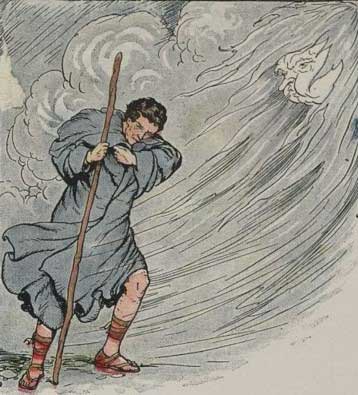
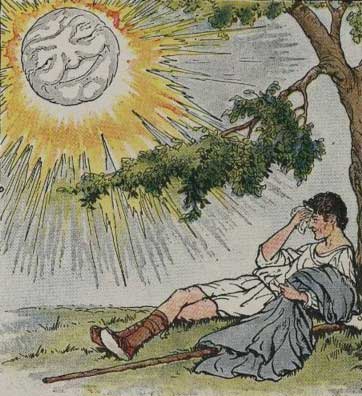
THE NORTH WIND AND THE SUN - Aesop Fable

The North Wind and the Sun had a quarrel about which of them was the stronger. While they were disputing with much heat and bluster, a Traveler passed along the road wrapped in a cloak.

"Let us agree," said the Sun, "that he is the stronger who can strip that Traveler of his cloak."

"Very well," growled the North Wind, and at once sent a cold, howling blast against the Traveler.

With the first gust of wind the ends of the cloak whipped about the Traveler's body. But he immediately wrapped it closely around him, and the harder the Wind blew, the tighter he held it to him. The North Wind tore angrily at the cloak, but all his efforts were in vain.


Then the Sun began to shine. At first his beams were gentle, and in the pleasant warmth after the bitter cold of the North Wind, the Traveler unfastened his cloak and let it hang loosely from his shoulders.

The Sun's rays grew warmer and warmer. The man took off his cap and mopped his brow. At last he became so heated that he pulled off his cloak, and, to escape the blazing sunshine, threw himself down in the welcome shade of a tree by the roadside.


Gentleness and kind persuasion win where force and bluster fail.

Sunday, May 23, 2010

How to live to 100: Lessons from the Blue Zones-Author: Scott


The Blue Zones
The Blue Zones: Lessons for Living Longer from the People Who Have Lived The Longest by Dan Buttner
Average Reading Time: 3.5 minutes
Why You Should Read It: Who wouldn’t mind having a few more enjoyable years on this earth?? These are useful, simple tips.
I wonder if I can live to be 100, and enjoy every year of it? I think it might be possible. Very possible. What about you? With all the guidance regarding longevity, diet and simple living, I have a strong feeling that some of us will live a lot longer than people give us credit for – If we stop following the crowd that is.
A few years ago Dan Buttner teamed up with National Geographic to go around the world and visit the populations with the greatest number of centenarians (people 100+ years old) who still live an enjoyable life, to see if there might be any lifestyle habits they all have in common. The results were encouraging. While these “Blue Zones” spanned from little villages in Costa Rica, Japan, Sardinia, and even California, the lifestyles of these people all had a lot in common.
So what can we do to live to be 100 (or at least give ourselves the best shot at it)?
1. Laugh: You think this one’s funny? I hope so. That means you’re on the right track. Don’t take life so seriously. There are few better remedies in life than a good belly laugh. Try to incorporate this 15-20 times a day.
2. Have close friends: The quality of our lives comes down to the people with whom we spend our days. Prioritize time with friends. Open up to them and allow them to do the same. Build genuine connections. Be there when people need you. Have a 2-3 hour weekly meal with those you care most about.
3. Stay close to your family: Don’t ever forget where you came from. Your family will be there when no one else will, as long as you nurture them. Most centenarians lived with or close to their family, where they experience daily love and connection. Sadly, the life expectancy living alone was not quite as rosy.
4. Eat mostly plants: While most of these people eat some meat here and there, the majority of their diets are meat free, consisting of mainly fruits and veggies.
5. Buy a case of nice red wine – And drink it, slowly: At least one of these will be easy to do right? Besides the heart and health benefits of the resveratrol and antioxidants, wine is just a nice way to sit back and take in life. Stick to a max of 2 glasses a day and promise yourself you’ll only drink with friends. That means you’re with your friends every day. Two birds with one stone!
6. Slow down and show up early: Being rushed everywhere you go is a fools game. Take some time to enjoy the slow dance of life. What is the real rush anyway? Simply being in a hurry causes stress. Try showing up 15 minutes early to things. That alone can do wonders. Something I’m especially working on.
7. Move and breathe: I shouldn’t even mention this one. It gets pounded over our head daily. Get off your ass and move and breathe a bit. Some of these centenarians walked or hiked miles in a day. Workout your heart. Feel what it’s like to breathe hard and get your blood pumping. How many of you feel better and more energized as soon as you finish a workout? Moving and breathing is one of the best stress relievers out there. The health benefits can’t be avoided but forget about those for a minute and notice how much more you enjoy your day when it starts with a workout. Twenty minutes is all you need…as a starter.
8. Have a purpose: Do you have any idea what the average life span is of men once they retire? 3 years. No joke. I am sure there are varying statistics on this but it’s pretty powerful. Our life, health and vitality is directly linked to the value we add to society and our compelling reasons for getting up each morning. Life begins and ends with purpose. Perhaps it’s running your business or maybe it’s just making your fiancee smile. Your purpose is yours to define. The important thing is to define it.
As you noticed, only a couple of the items on this very condensed list have to do with what you put into your body. It’s crucial and we hear it all the time. But I listed these other things because they almost seem too basic for anyone to consider. I assure you they are not. These are the daily habits that lead to a lifetime of enjoyment. Happiness not spent today does not equal more happiness tomorrow.
Let me repeat that:
Happiness not spent today does not equal more happiness tomorrow.
Wake up with a purpose, enjoy your friends, cherish your family, and of, course the laughing will come naturally.
It should not be a surprise that financial success isn’t anywhere on the list. In fact I would not be surprised if there was a negative correlation between longevity and wealth. Money is important to a point, but it comes after the things listed above; don’t make it your sole focus. Remember happiness postponed is happiness lost.
As with most guidance for treating your body and your life the way it deserves: simplify, simplify, simplify. A lot of the answers can be found by getting back to basics. If you are ever in doubt, ask yourself this question: How would someone have done it 200 years ago?
Give it a shot and who knows, maybe I’ll see you at your 101st birthday party.

Saturday, May 22, 2010

The Blind Bus Passenger- Spiritual Story by Unknown

The passengers on the bus watched sympathetically as the attractive young woman with the white cane made her way carefully up the steps. She paid the driver, and using her hands to feel the location of the seats, walked down the aisle and found the seat he'd told her was empty. Then she settled in, placed her briefcase on her lap and rested her cane against her leg. It had been a year since Susan, thirty-four, became blind. Due to a medical misdiagnosis she had been rendered sightless, and she was suddenly thrown into a world of darkness, anger, frustration and self-pity.

Once a fiercely independent woman, Susan now felt condemned by this terrible twist of fate to become a powerless, helpless burden on everyone around her.How could this have happened to me?she would plead, her heart knotted with anger. But no matter how much she cried or ranted or prayed, she knew the painful truth: her sight was never going to return. A cloud of depression hung over Susan's once optimistic spirit. Just getting through each day was an exercise in frustration and exhaustion.

And all she had to cling to was her husband Mark. Mark was an Air Force officer and he loved Susan with all his heart. When she first lost her sight, he watched her sink into despair and was determined to help his wife gain the strength and confidence she needed to become independent again. Mark's military background had trained him well to deal with sensitive situations, and yet he knew this was the most difficult battle he would ever face.

Finally, Susan felt ready to return to her job, but how would she get there? She used to take the bus, but was now too frightened to get around the city by herself. Mark volunteered to drive her to work each day, even though they worked at opposite ends of the city. At first, this comforted Susan and fulfilled Mark's need to protect his sightless wife who was so insecure about performing the slightest task.

Soon, however, Mark realized that this arrangement wasn't working - it was hectic, and costly. Susan is going to have to start taking the bus again, he admitted to himself. But just the thought of mentioning it to her made him cringe. She was still so fragile, so angry. How would she react?

Just as Mark predicted, Susan was horrified at the idea of taking the bus again. I'm blind! she responded bitterly.How am I supposed to know where I'm going? I feel like you're abandoning me.Mark's heart broke to hear these words, but he knew what had to be done. He promised Susan that each morning and evening he would ride the bus with her, for as long as it took, until she got the hang of it. And that is exactly what happened. For two solid weeks, Mark, military uniform and all, accompanied Susan to and from work each day. He taught her how to rely on her other senses especially her hearing, to determine where she was and how to adapt to her new environment.

He helped her befriend the bus drivers who could watch out for her and save her a seat. He made her laugh, even on those not-so-good days when she would trip exiting the bus, or drop her briefcase. Each morning they made the journey together, and Mark would take a cab back to his office. Although this routine was even more costly and exhausting than the previous one, Mark knew it was only a matter of time before Susan would be able to ride the bus on her own. He believed in her, in the Susan he used to know before she'd lost her sight, who wasn't afraid of any challenge and who would never, ever quit.

Finally, Susan decided that she was ready to try the trip on her own. Monday morning arrived, and before she left, she threw her arms around Mark, her temporary bus riding companion, her husband, and her best friend.

Her eyes filled with tears of gratitude for his loyalty, his patience and his love. She said goodbye, and for the first time, they went their separate ways. Monday, Tuesday, Wednesday, Thursday. Each day on her own went perfectly, and Susan had never felt better. She was doing it! She was going to work all by herself!

On Friday morning, Susan took the bus as usual. As she was paying for her fare to exit the bus, the driver said,Boy, I sure envy you.Susan wasn't sure if the driver was speaking to her or not. After all who on earth would ever envy a blind woman who had struggled just to find the courage to live the past year? Curious she asked the driver,Why do you say that you envy me?The driver responded,It must feel so good to be taken care of and protected like you are.Susan had no idea what the driver was talking about, and asked again,What do you mean?

The driver answered,You know, every morning for the past week, a fine looking gentleman in a military uniform has been standing across the corner watching you when you get off the bus. He makes sure you cross the street safely and he watches you until you enter your office building. Then he blows you a kiss, and gives you a little salute and walks away. You are one lucky lady.Tears of happiness poured down Susan's cheeks. For although she couldn't physically see him, she had always felt Mark's presence. She was lucky, so lucky, for he had given her a gift more powerful than sight, a gift she didn't need to see to believe - the gift of love that can bring light where there had been darkness.

That's Not My Problem- Spiritual Story by Unknown

A mouse looked through a crack in the wall to see the farmer and his wife opening a package; what food might it contain?

He was aghast to discover that it was a mouse trap!

Retreating to the farmyard, the mouse proclaimed the warning,There is a mouse trap in the house, there is a mouse trap in the house.

The chicken clucked and scratched, raised her head and said,Mr. Mouse, I can tell you this is a grave concern to you, but it is of no consequence to me; I cannot be bothered by it.

The mouse turned to the pig and told him,There is a mouse trap in the house.

I am so very sorry Mr. Mouse, sympathized the pig,but there is nothing I can do about it but pray; be assured that you are in my prayers.

The mouse turned to the cow, who replied,Like wow, Mr. Mouse, a mouse trap; am I in grave danger, Duh?;

So the mouse returned to the house, head down and dejected to face the farmer's mouse trap alone.

That very night a sound was heard throughout the house, like the sound of a mouse trap catching its prey. The farmer's wife rushed to see what was caught.

In the darkness, she did not see that it was a venomous snake whose tail the trap had caught.

The snake bit the farmer's wife.

The farmer rushed her to the hospital.

She returned home with a fever. Now everyone knows you treat a fever with fresh chicken soup, so the farmer took his hatchet to the farmyard for the soup's main ingredient.

His wife's sickness continued so that friends and neighbors came to sit with her around the clock. To feed them, the farmer butchered the pig.

The farmer's wife did not get well, in fact, she died, and so many people came for her funeral the farmer had the cow slaughtered to provide meat for all of them to eat.

So the next time you hear that someone is facing a problem and think that it does not concern you, remember that when the least of us is threatened, we are all at risk.